How We Build a Software Development Team Clients Can Trust
What if you could see how a developer works before hiring them? We get that chance long before the first interview.
24 September, 2026
How We Build a Software Development Team Clients Can Trust
What does it take to build a reliable software development team?
At BandaPixels, we believe it starts long before someone joins a project.
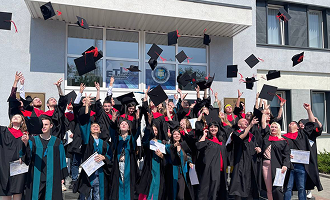
We work with local universities and educational institutions to help develop the next generation of software developers. One of our long-term partnerships is with the Robert Elworthy Economics and Technology Institute (ETI) in Kropyvnytskyi. Some of our developers and team leads teach there. We help prepare and update courses, bring real project experience into the classroom, and get to know students as they develop.
Some of those students eventually join BandaPixels, becoming part of the talent pipeline we’ve been building over time.
We sat down with Valentin Yelkin, a BandaPixels Full Stack Developer and ETI lecturer; Viktoriia Davidenko, a BandaPixels Full Stack Developer and ETI graduate; and Oleksii Izvalov, an ETI lecturer and candidate of technical sciences, to talk about what this approach looks like in practice and why it matters to the clients who trust us with their products.
The Partnership
Let’s start with the basics. What exactly does BandaPixels do with ETI?
Valentin: I’ve been working at BandaPixels for five years. I started with frontend development, then moved into backend as well, and now I work on different web applications. On my latest project, I also got into React Native.
At ETI, I teach computer science and subjects related to web development, including React, server-side development, and computer architecture.
The interesting part is that I can explain things students will actually face in their work. I can show them real examples and explain why a particular solution makes sense.
Oleksii: I teach programming, game development, artificial intelligence, virtual reality, and computer graphics. I also supervise student projects and organize activities like exhibitions, international hackathons, and game jams.
BandaPixels supports this work in different ways. Their specialists teach guest lectures and full courses, and the company also helps students participate in events where they can present their projects and learn about new developments in IT. And we’re super grateful to BandaPixels for partnering with us on this.
But the biggest part of the partnership is the educational program itself. How involved is BandaPixels in preparing it?
Valentin: We don’t just come in and talk about what we do. We help prepare the actual courses.
The idea is to connect theory with the kind of work students will eventually do. So when we teach something, we try to explain how it works in a real application, what can go wrong, and what a developer needs to think about beyond the code itself.
For example, if we’re studying APIs, we can look at how a form sends data to a server, how that data is validated and saved, and how the application should respond if something fails.
Then students do the task themselves. We review what they’ve built and discuss what could be improved.
Oleksii: That connection is important. When I was first starting out in IT, the hardest part was just finding information. Internet access wasn’t a thing back then, all I had was the official documentation in English. Today, students have every resource imaginable at their fingertips, including AI assistants. But information alone doesn’t create a good developer. They need to understand how a system works as a whole, why they’re making a particular decision, and how one feature can affect other parts of the project. That’s something we try to develop through the program.
Why Start at the Institute?
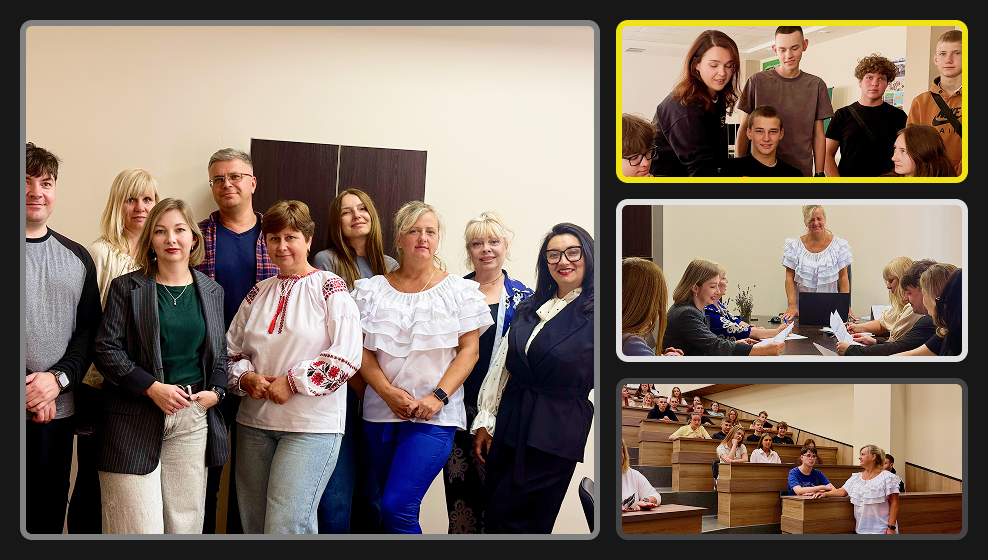
ETI isn’t a huge university. What makes it interesting for BandaPixels as a source of talent?
Valentin: The institute is relatively small. There’s roughly one new group per specialty each year. In Computer Science, that’s around 30 students.
The admission scores are quite competitive. Many students come in with strong school results, olympiad experience, or courses and projects they’ve already completed.
Of course, not everyone starts with practical programming experience. But many of them have a strong academic foundation and, more importantly, the motivation to learn.
And because we teach there, we can see how students develop over time.
That’s very different from meeting someone for one interview and trying to understand everything about them in an hour.
You can see how they approach a difficult task, how they react to feedback, whether they keep trying when something doesn’t work, and whether they can explain their decisions.
Those things are difficult to judge from a CV.
Oleksii: Exactly. We all know anyone can put anything on a CV. There are even AI tools that will tailor a resume perfectly for a specific job posting – and I’ve seen experiment results showing that HR screening AIs actually prefer these AI-generated resumes.
A quick interview might show someone’s coding and problem-solving skills, but it won’t capture the traits that actually matter in the long run, like accountability, persistence, and teamwork.
When I teach students, I get to see how they handle mistakes and feedback, whether they can troubleshoot problems on their own, ask the right questions, and actually take tasks over the finish line instead of just showing off isolated technical skills. You also notice how well someone plans their workload, assesses their own capacity, helps teammates, and takes ownership of their part of a shared project. These are the qualities that determine how quickly a junior turns into a dependable specialist, even though you’ll rarely spot them on a resume.
What Does “Growing Our Own Developers” Mean?
This is the part we really want to understand. When you say BandaPixels grows its own developers, what does that actually look like?
Valentin: It starts with the education itself. We help prepare courses, teach students, and bring practical examples into the classroom.
Then, as students develop, we can see who is ready for more challenging tasks and who is genuinely interested in software development.
When someone joins BandaPixels, the learning doesn’t stop. They continue developing inside the company, with mentoring, code reviews, and gradually increasing responsibility.
Oleksii: I think the key word is gradually.
You can’t expect someone to become a strong developer just because they’ve learned a programming language. They need to understand the product, the architecture, the development process, the quality standards, and how to work with other people. That takes time.
Valentin: And it’s not just about technical skills.
For me, a person is ready for more responsibility when they can figure out a task, ask about unclear points, finish the work, or suggest their own solution.
Being independent also means knowing when to ask for help.
That’s something we try to develop from the beginning.
From Student to Full Stack Developer
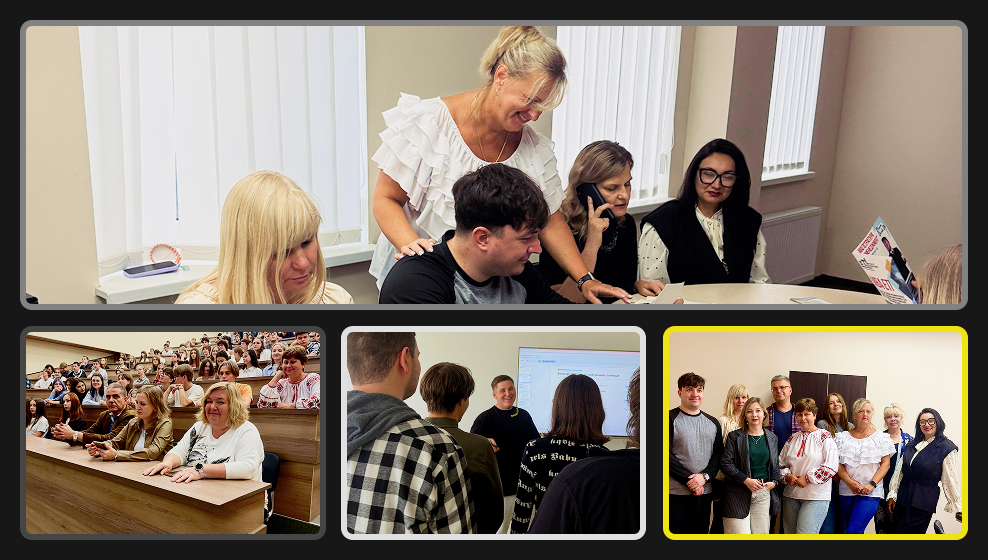
Viktoriia, you went through this process yourself. What was your starting point?
Viktoriia: I graduated from ETI with a degree in Computer Science, and I’ve been working as a Full Stack Developer at BandaPixels for a year and a half.
When I started studying, my knowledge was basically zero. But I had a huge desire to learn and big ambitions.
What helped you most during your studies?
Viktoriia: The fact that some of the teachers were working in IT themselves.
It made the subjects feel more relevant. You could see that what they were teaching was something you might actually need in the future.
I especially liked when they shared examples from their current projects. It was easier to understand why a particular topic mattered.
When did you first come across BandaPixels?
Viktoriia: In the summer of 2024, when my curator sent me a test assignment for one of the positions at BandaPixels.
By that point, I already knew some of the people who worked there. A few of my colleagues had taught at the institute while I was studying, and some still do.
That made getting used to the new environment easier.
What was the hardest part of moving from education to a real client project?
Viktoriia: Working with an existing project.
At the institute, you mostly write things from scratch and know your own code. On a real project, you need to understand someone else’s code and make changes without breaking the logic that’s already there.
There’s a lot to analyze and understand.
Did knowing the people and approaches at BandaPixels help?
Viktoriia: Definitely. It was easier to get comfortable when there were already familiar people around.
And I think there was also a sense of trust on both sides. I knew the people and the way they worked, and they had already seen how I studied and developed.
That made the transition feel more natural.
Why Not Just Hire Experienced Developers?
A client might ask: why invest years in developing people when you can simply hire experienced developers from the market?
Valentin: Hiring experienced developers is important too. And of course, when we hire someone, we can check their technical skills. But that’s only part of what makes someone a good developer. For us and our clients, soft skills matter just as much. At the end of the day, software development is a team effort – people work with people.
When you develop someone inside a team, you get to see things that are difficult to assess during a CV review or a single interview. You see how responsible they are, whether they keep their commitments, how they communicate, how they handle feedback, and how they work with other people.
At the same time, they learn how the team works, how decisions are made, and why certain solutions were chosen. They become familiar with the project and its context, while the team gets to understand their strengths, weaknesses, and the kind of tasks they’re ready to take on.
So this approach helps us find people who have both strong technical skills and the soft skills to become a reliable part of the team.
Viktoriia: I think there’s also a stronger sense of trust.
When a company invests in your development, you understand that it’s interested in your growth, not just in filling a vacancy.
And when you know there’s a real opportunity to work after your studies, it gives you an additional reason to keep learning.
Oleksii: Of course, no one can guarantee that every employee will stay forever. People make their own career choices.
But a company that invests in people over several years builds something more stable than one that is constantly looking for someone to fill the next open position.
An engineer who’s grown alongside the team makes smarter decisions faster, spots risks way earlier, and hits the ground running when new tasks come up. It also keeps more knowledge inside the company.
On the flip side, employees actually see a path forward, feel trusted, and are way more willing to take ownership of long-term goals.
What Does the Client Get?
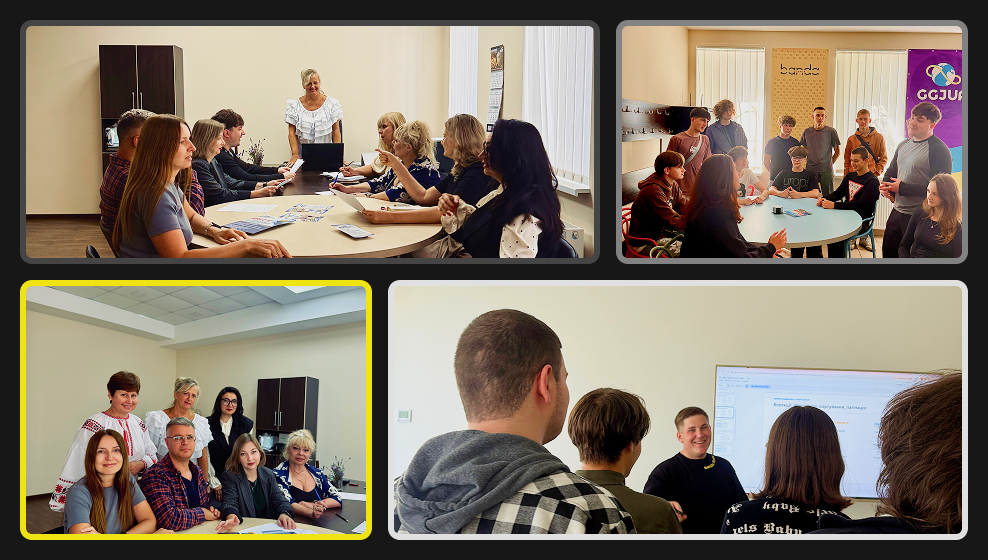
Let’s bring this back to the client. Why should someone choosing a development partner care about where the developers come from?
Oleksii: Because the way a company builds its team affects the quality and predictability of the work.
If someone is hired based only on a few formal criteria and immediately placed on a complex project without enough context or support, there are risks. They may misunderstand the product, underestimate a task, or make decisions that create problems later.
That’s why I think it’s important for developers to understand more than just the technical side of a project. For example, subjects like business logic help students see how software connects to real business processes and goals. They start to understand not just how to build a feature, but why it is needed and what it should achieve.
That understanding can lead to better implementation and, sometimes, to new ideas for improving the product. A developer who understands the business context can ask better questions and suggest changes that might be useful for the product.
When a company knows its developers over time and develops them systematically, it has more information about who can handle which responsibilities. That helps reduce the risks.
For clients, this also means they’re not just getting a random bunch of devs thrown together. They’re getting a team that has been developed with clear standards and understands both the technical and business sides of the work. That’s what actually builds trust – clients know exactly who’s building their product and why this team can be trusted to take real long-term ownership
Valentin: The client gets a team where people already understand the project, the requirements, and how to work together.
They can often spot problems before a feature reaches testing. There are fewer misunderstandings, less repeated explanations, and less unnecessary rework.
The work becomes more predictable.
Viktoriia: And as a developer, I think it’s valuable when the team is made up of people who are qualified, motivated, and willing to keep learning.
That benefits the client because the team can bring better solutions and become a stronger part of the product over time.
Why Our Growth Is Deliberate
Does this approach affect how quickly BandaPixels can expand a project?
Valentin: Yes. We don’t always expand as quickly as we could if we were simply looking for available people on the market. We prefer to grow teams gradually.
When someone joins, they need time to understand the project, learn the processes, and take on responsibility at the right pace.
That’s better for the developer, the team, and the client.
Oleksii: A strong development team can grow in different ways. If a client needs to expand quickly, there is always an option to bring in an experienced specialist from the market and strengthen the team right away.
But there is also a good option for clients who can plan their growth in advance. Students at ETI spend four years studying intensively and graduate with a bachelor’s degree in engineering. During their studies, they also get practical experience through projects where this is possible, as well as internal company projects.
So by the time they graduate, they already have a solid technical foundation and experience working on practical tasks. They also understand how development works in a real team, rather than only learning programming as a theory.
For a client who knows they’ll need to grow a team over the next few years, this creates a very practical model. BandaPixels can gradually bring two or three developers into the project each year, rather than having to build a large team from scratch when the need suddenly appears.
The people joining the team can grow together with the project, build on the knowledge already inside the team, and stay involved for the long term. This makes it possible to plan team growth while keeping the project stable and productive.
Viktoriia: And I think it’s important that people grow together with the project.
When you’re involved in a product for a long time, you understand its history, its decisions, and its goals. You become more than someone who completes individual tasks.
What Makes Someone Worth Investing In?
What do you look for in students who might become good developers?
Valentin: Curiosity and the willingness to figure things out.
They want to understand why the code works the way it does. They try different approaches, ask questions, and come up with their own solutions.
Being able to accept feedback is important too.
Viktoriia: I think motivation matters a lot too.
You don’t need to know everything when you start. But you need to be willing to learn and keep going.
A Long-Term Investment in Better Delivery
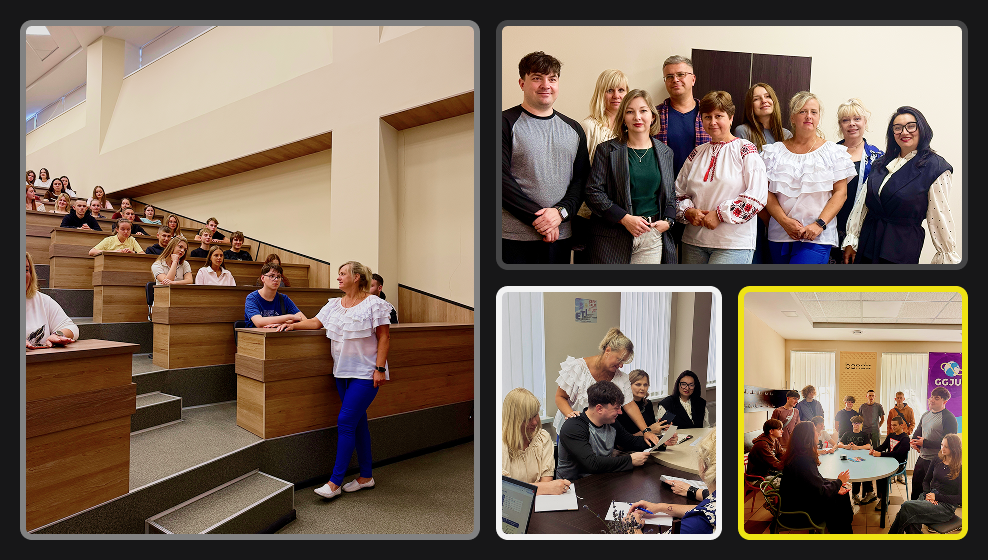
If you had to explain the value of this approach to a client, what would you say?
Valentin: The client gets a team that knows the product, understands the requirements, and works together in a predictable way.
Viktoriia: I’d say the company invests in people who can become a strong part of the team, rather than just looking for someone to fill a position.
Oleksii: I would emphasize that in the end, the client gets a smooth, predictable process and a team that doesn’t just blindly complete tasks, but actually gets the product, its background, and the business goals behind it. Because the team stays stable, you waste way less time re-explaining context or getting new people up to speed, and institutional knowledge doesn’t just walk out the door every time someone leaves.
When devs are trained with consistent standards, they’re way better at estimating timelines, catching risks early on, and writing code that’s actually easy to maintain and scale. For the client, that means fewer bugs, no surprise costs, smoother communication, and total confidence that the product stays solid – not just for launch day, but for the long haul.
The Bigger Picture
At BandaPixels, we know that a reliable development team doesn’t appear overnight.
It takes good people, practical education, mentoring, and time.
That’s why our partnership with ETI matters to us.
We help prepare the curriculum. Our team leads teach. We bring real development experience into the classroom. We get to know students before they become employees, and we continue developing them after they join.
Some of those students become BandaPixels developers. Others find their own path. Either way, we’re helping build a stronger local IT community.
And for our clients, this approach gives us something valuable: a deeper understanding of the people we bring into their projects, a more deliberate way to grow teams, and a foundation for more predictable delivery.
We’re proud of that.
Because when we say we build software with our clients, we also mean we invest in the people who will be building it with them for years to come.
Let's work together to make your project a success
Contact usRelated News


Last News
Thank you!
We’ve received your contact request and will contact you soon
Something went wrong
We couldn’t receive your contact request. Please try again later.