Fuel Crisis 2026 and the Wake-Up Call for Smart City Businesses
An Interview with Max Obrazchykov – Founder of BandaPixels
20 May, 2026
Fuel Crisis 2026 and the Wake-Up Call for Smart City Businesses
A few months ago, a global fuel crisis still sounded like one of those worst-case scenarios people discuss on LinkedIn and then forget about a week later. Now it’s obvious we’re in this for the long run. And even if the Strait of Hormuz reopens, things may not go back to how they were. If transit fees are introduced or increased, fuel will keep flowing – but at a much higher cost.
Now oil supply disruptions, rising energy costs, pressure on governments, and delayed infrastructure budgets are quickly turning into very real business problems. Aviation will likely take the hardest hit. We may even see several European airlines disappear. As for smart city projects, this won’t mean a full stop, but rather a painful slowdown driven by higher operating costs and increasingly complex funding transfers from state and municipal authorities.
We spoke with Max Obrazchykov, Founder of BandaPixels, about what could happen next, why many companies are underestimating the risks, and why this might actually become a turning point for businesses willing to optimize early instead of reacting late.
“This Is Bigger Than Just Expensive Fuel”
— Max, how serious could this situation become?
Honestly, much more serious than most people think.
If the issues around the Strait of Hormuz continue, Europe could temporarily lose access to around 25% of oil and petroleum products. To fill that gap, countries would need to buy supply at higher prices, driving up costs everywhere.
And when people hear that, they usually think only about fuel prices.
But this affects entire systems:
- electricity,
- heating,
- agriculture,
- fertilizers,
- logistics,
- public transportation,
- city infrastructure.
This isn’t just about paying more at the gas station. It’s about entire systems becoming more expensive and less stable.
“Even If Supply Routes Reopen Tomorrow, The Effects Will Stay”
— So if the situation gets resolved quickly, does the market recover quickly too?
Not really.
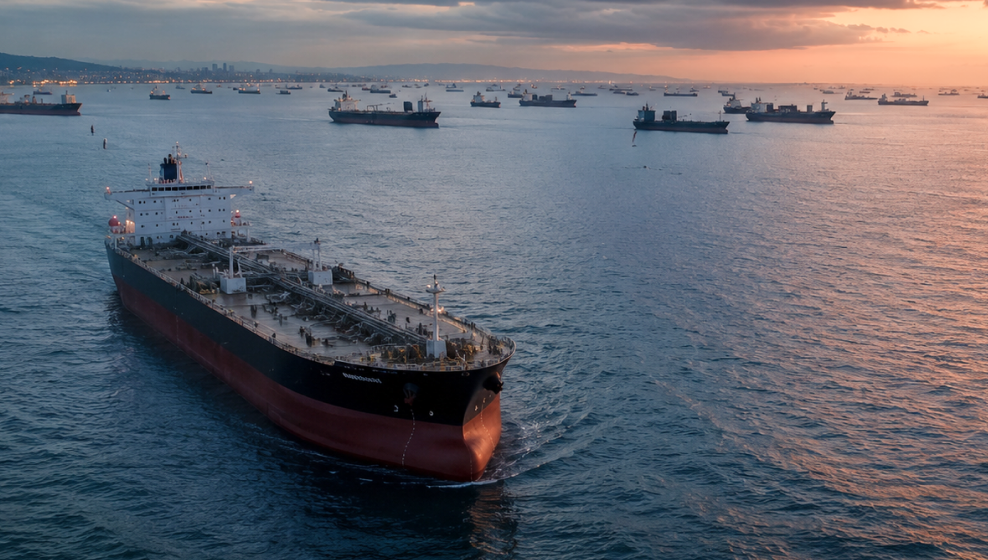
Even if the strait reopens tomorrow, it still takes time for tankers to actually reach Europe – anywhere from three to six months in some cases. On top of that, there’s already a a long queue of ships waiting.
Global supply chains move slowly. You can’t restart them overnight.
Realistically, I think this crisis could last anywhere from six months to a year.
And that’s still a fairly optimistic scenario.
“Europe Will Probably Pay More Instead of Running Out”
— Who’s going to feel the biggest impact?
Europe will most likely do everything possible to avoid actual shortages.
That means European countries will simply start paying more for oil and petroleum products to secure supply.
So Europe probably won’t be the region left completely without resources.
Poorer countries are the ones that may struggle the most because they simply won’t be able to compete on price. As a result, they risk facing real shortages while wealthier economies continue buying supply at premium prices.
This will create additional pressure on manufacturing, transportation,logistics, energy markets, food production.
Everything becomes more expensive at the same time.
“Governments May Start Pulling Money From City Projects”
— What does this mean for smart city and infrastructure companies?
A lot of city projects depend heavily on government and municipal funding.
And during a crisis, governments usually redirect money toward immediate problems:
- fuel subsidies,
- heating support,
- electricity assistance,
- public aid programs.
Which means infrastructure and innovation budgets often become secondary.
So companies working with public-sector projects should probably prepare for:
- budget freezes,
- delayed payments,
- slower approvals,
- growing accounts receivable.
I think many businesses are still underestimating how much liquidity from government structures could shrink over the next year.
“This Is Actually The Best Time To Optimize”

— Sounds pretty grim. Is there any upside for businesses?
Definitely.
Every crisis eventually rewards efficient companies.
The businesses that start optimizing operational costs now could come out of this period much stronger financially.
And the ones that continue operating like market conditions haven’t changed may struggle to survive the next 12 months.
This is one of those moments where operational efficiency suddenly becomes more important than growth.
Which Companies Will Survive the Crisis Better Than Others?
1. Companies That Build More Predictable Revenue
— Where should companies start?
Recurring revenue.
If you have a digital product, this is probably the right time to rethink monetization:
- subscriptions,
- premium features,
- paid modules,
- SaaS models,
- usage-based pricing.
When the market becomes unstable, predictable monthly revenue matters a lot more than one-time sales.
2. Companies That Learn to Monetize Their Audience
A lot of infrastructure and smart city platforms still avoid advertising models completely.
That may change.
Companies could start introducing:
- ad-supported free features,
- internal advertising systems,
- advertiser dashboards,
- sponsored placements.
And regulators may become more flexible about this during a crisis because keeping platforms financially alive becomes more important especially when critical city services are involved.
3. Companies That Invest in Predictive Maintenance
One of the biggest opportunities is predictive maintenance and analytics.
A lot of companies still service equipment based on schedules instead of actual operational data.
But analytics can help reduce:
- unnecessary maintenance,
- unexpected breakdowns,
- repair costs,
- downtime.
And during a crisis, these optimizations can directly determine whether a company remains profitable.
4. Companies That Optimize Logistics
Fuel costs will hit logistics hard.
Which is why companies will start paying much more attention to:
- route optimization,
- reducing empty trips,
- fleet analytics,
- real-time traffic data,
- delivery efficiency.
Even a small reduction in fuel consumption can create huge savings at scale.
5. Companies That Start Using Operational Data Properly
A simple example is waste management.
If a city knows which containers are actually full, garbage trucks don’t need to follow fixed routes every time.
That means fewer trips, lower fuel usage and lower operational costs.
The same logic applies to deliveries, maintenance fleets, utility services, and almost any physical operation.
Data-driven infrastructure won’t feel like innovation anymore.
It’ll just become the normal way companies survive.
“The Worst Thing Companies Can Do Right Now Is Wait”

— What’s your biggest piece of advice for businesses?
Don’t wait for things to get worse before reacting.
This is probably the best time to start making difficult decisions while you still have flexibility.
Many companies are still heavily investing in new features as if market conditions will remain unchanged.
But in some cases, it may be smarter to rethink their roadmap and focus more on cost optimization, automation and operational efficiency instead of expansion.
Because once the crisis fully hits, restructuring becomes much harder and much more painful.
“Offshore Development Can Become a Huge Advantage”
— How could this affect software development teams?
Companies that already work with offshore teams will have much more flexibility.
They can:
- reduce expensive in-house costs,
- keep development moving at lower operational cost,
- scale teams more carefully.
Some companies may pause offshore contracts to cut spending.
Others may actually expand offshore development and reduce expensive local hiring instead.
And for companies that still don’t use offshore development, this may be the moment to seriously think about restructuring before the pressure becomes unavoidable.
Doing it early is always less painful than doing it during a full-blown crisis.
“The Next Year Won’t Be About Growth at Any Cost”
— What do you think the next year looks like for businesses overall?
I don’t think the next year will be about aggressive expansion anymore.
It’ll be about:
- operational efficiency,
- cash flow,
- reducing waste,
- financial stability,
- adaptability.
At the same time, not all companies will survive the crisis. Market consolidation is almost inevitable – some will exit, while others will grow by absorbing their clients and increasing their share of funding.
The companies that start preparing now will probably come out of this much stronger later.
The ones that wait too long may spend the next year just trying to catch up.
Final Thoughts
The fuel crisis isn’t only an energy problem anymore.
For smart city companies, infrastructure businesses, logistics platforms, and technology providers, it’s quickly becoming a real operational challenge.
We’ve moved from a period of stable, fast growth and easy scaling into a completely different financial cycle. Now the minimum goal is survival. And if you do more than survive, you have a real chance to capture the markets left behind by weaker players.
And moments like this usually separate companies into two groups:
The ones that react early.
And the ones that wish they had.
Which one are you in?
Let's work together to make your project a success
Contact usRelated News



Last News
Thank you!
We’ve received your contact request and will contact you soon
Something went wrong
We couldn’t receive your contact request. Please try again later.