Healthcare Is Back: Why Tech Giants Are Betting Big on Healthcare
Healthcare is back on the tech radar. And this time, it’s not just about AI. So, what’s really behind the comeback?
20 August, 2026
Healthcare Is Back: Why Tech Giants Are Betting Big on Healthcare
For years, healthcare had a reputation for being slow to change. New technologies took years to adopt, regulations slowed innovation, and many providers still relied on outdated systems. Compared to industries like fintech or eCommerce, healthcare often felt like it was moving at its own pace.
That picture is changing.
Healthcare is becoming one of the fastest-growing markets for digital products. Hospitals are investing in automation, startups are attracting billions in funding, AI is finding practical applications, and even the world’s biggest tech companies are treating healthcare as one of their top strategic priorities.
So, why is it becoming such a hot market again? Let’s take a closer look.
Why Investors Are Betting on Healthcare Again
Healthcare is growing because the demand has become impossible to ignore.
- The population is getting older
People are living longer than ever before. While that’s great news, it also means healthcare systems need to support millions more patients with chronic conditions.
More patients means:
- more appointments
- more diagnostics
- more medical records
- more follow-up care
- more administrative work
Without digital tools, healthcare organizations simply can’t keep up.
2. Healthcare professionals are in short supply
Many countries are facing a shortage of doctors, nurses, and medical staff. At the same time, demand for healthcare services keeps growing.
Technology isn’t replacing healthcare professionals. It’s helping them spend less time on repetitive tasks and more time with patients.
Today, AI can summarize medical notes, automate documentation, assist with scheduling, prioritize incoming cases, and support clinical decisions. Even saving a few minutes per patient can make a significant difference across an entire hospital.
3. Patients expect digital-first experiences
Healthcare is no longer competing only with other hospitals.
It’s competing with every great digital experience people have every day. When someone can order groceries in two taps or open a bank account in five minutes, waiting weeks just to schedule an appointment feels outdated.
Now patients expect:
- online appointment booking
- secure messaging with doctors
- digital prescriptions
- access to medical records
- remote consultations
- personalized health recommendations
Healthcare providers that offer these experiences improve not only patient satisfaction but also retention and operational efficiency.
4. AI has finally become practical
For years, AI in healthcare sounded promising but often failed to deliver real value.
That’s changing.
Instead of trying to replace doctors, modern AI focuses on solving everyday problems.
Today it helps healthcare organizations:
- automate paperwork
- analyze medical images
- detect potential health risks
- assist with diagnostics
- support patient communication
- predict hospital workloads
The result isn’t futuristic medicine. It’s simply making healthcare work better.
5. Healthcare has become a long-term investment
Unlike many industries driven by short-term trends, healthcare demand isn’t going away.
People will always need medical care. Populations will continue to age. Chronic diseases will remain one of the biggest global health challenges.
That’s why investors increasingly see healthcare as one of the most stable sectors for long-term growth.
And they’re not the only ones placing big bets.
Some of the world’s largest technology companies are investing billions of dollars to become part of healthcare’s future.
Why Tech Giants Are Investing Billions in Healthcare
For years, healthcare was considered one of the hardest industries to enter. Strict regulations, complex workflows, and legacy systems kept many tech companies at a distance.
Today, the situation looks very different.
Nearly every major technology company is building healthcare products, investing in medical AI, or creating platforms for hospitals, researchers, and patients. Some are developing wearable devices. Others are building AI models that help doctors diagnose diseases faster. Some focus on cloud infrastructure, while others invest directly in healthcare startups.
The common goal is clear: healthcare is becoming one of the biggest technology markets of the next decade.
- Apple is expanding healthcare beyond the Apple Watch
Apple’s healthcare strategy has grown far beyond fitness tracking and personal wellness.
Today, the company is working across several parts of the healthcare ecosystem. Its devices help clinicians communicate, access patient information, and manage workflows. iPhone and iPad are also being used to support remote care, while Apple Watch and the Health app help patients monitor their health from home.
The interesting part is how these pieces connect.
Apple’s technology can bring together data from devices, health records, and third-party apps, giving patients a more complete view of their health. With Health Records, users can securely access clinical information from participating healthcare organizations, while providers can receive selected health data from patients through the Health app.
Apple is also pushing further into remote care and medical research. Its technology is being used to monitor patients at home, support chronic disease programs, and collect health data for large-scale research. For example, Apple’s healthcare case studies show that Ochsner Health’s digital medicine programs helped 79% of participating patients better control their blood pressure within 180 days.
So Apple’s role in healthcare is becoming much broader: from the devices patients already use to the tools clinicians rely on and the research that could shape future care.
2. Samsung is building a full healthcare ecosystem
Samsung’s work in healthcare goes far beyond smartwatches.
The company works across several areas, including medical equipment, hospital technology, mobile devices, and consumer health apps.
On the medical side, Samsung develops ultrasound, digital X-ray, and CT systems. These tools help doctors with diagnostics and patient care.
Samsung also brings its smartphones and tablets into hospitals. Doctors can use them to access patient information, communicate with colleagues, and support remote consultations. Samsung Knox helps protect sensitive healthcare data on these devices.
Then there is the consumer side.
Samsung Health and Galaxy Watch help people track sleep, heart rate, activity, blood pressure, and other health metrics. This gives people more insight into their health between doctor visits.
Put together, these products give Samsung a much bigger role in healthcare. The company is connecting patients, doctors, and healthcare organizations through devices, software, and medical technology.
3. Google is investing in AI for medicine
Google approaches healthcare from a different angle.
Rather than building medical devices, the company focuses heavily on artificial intelligence, medical research, and cloud infrastructure.
Its AI models are already being used to support medical imaging, detect diseases earlier, assist with clinical documentation, and accelerate biomedical research.
Google Cloud has also become an important technology partner for healthcare organizations that need secure infrastructure for storing and analyzing enormous amounts of medical data.
Another major focus is generative AI.
Hospitals are exploring Google’s AI tools to summarize patient histories, help doctors find relevant information faster, and reduce the administrative burden that contributes to clinician burnout.
4. Microsoft is building the infrastructure behind modern healthcare
Microsoft’s healthcare strategy is less visible to patients but equally important.
Many hospitals already rely on Microsoft Cloud, Azure, Teams, and enterprise security solutions.
Over the past few years, Microsoft has significantly expanded its healthcare AI capabilities. Its technologies now help organizations automate clinical documentation, improve communication between medical teams, and analyze large datasets for research and operational planning.
With the rapid growth of generative AI, Microsoft is positioning itself as one of the companies providing the infrastructure that healthcare organizations need to adopt AI responsibly and securely.
5. Amazon wants to simplify healthcare access
Amazon has spent years experimenting with healthcare.
The company has acquired healthcare businesses, expanded pharmacy services, invested in primary care, and continued developing Amazon Web Services as one of the leading cloud platforms for healthcare organizations.
AWS now powers thousands of healthcare applications worldwide, from hospital systems to biotech companies developing new treatments.
Amazon’s strength has always been customer experience.
It’s applying the same philosophy to healthcare by making services easier to access, simplifying medication delivery, and reducing friction throughout the patient journey.
6. NVIDIA is powering the AI revolution in healthcare
While companies like Apple and Samsung build healthcare products, NVIDIA is building the technology behind them.
Modern healthcare AI requires enormous computing power, and NVIDIA has become one of the key providers of the GPUs used to train medical AI models.
Its technology supports everything from drug discovery and medical imaging to genomics and digital twins for hospitals.
As AI adoption accelerates, NVIDIA benefits regardless of which healthcare company ultimately wins, because many of them rely on NVIDIA’s infrastructure to develop and run their AI systems.
Why Are They All Investing Now?
Although each company has its own strategy, they all see the same opportunity.
Healthcare generates massive amounts of data, yet much of it remains underused. At the same time, providers face increasing pressure to improve outcomes while reducing costs.
Technology can help solve both challenges.
AI can automate repetitive work. Cloud platforms make healthcare systems more connected. Wearables provide continuous health insights instead of occasional checkups. Remote monitoring helps patients stay at home instead of returning to hospitals.
For technology companies, healthcare is no longer just another vertical.
It’s becoming one of the largest opportunities for innovation over the next decade, with the potential to improve millions of lives while creating entirely new digital ecosystems.
And one of the areas where this transformation is already visible is telehealth. What was once considered a convenient alternative has quickly become an essential part of modern healthcare.
Telehealth Isn’t Replacing Healthcare. It’s Expanding It.

Not long ago, telehealth was mostly associated with video calls.
If you needed a quick consultation or couldn’t visit a clinic, you booked an online appointment, talked to a doctor, and that was it.
Today, telehealth has become much bigger than virtual consultations.
It’s evolving into a complete digital care ecosystem that connects patients, doctors, caregivers, and medical data regardless of location.
Instead of asking, “Can this appointment happen online?”, healthcare providers are starting to ask a different question:
“Does this patient actually need to come to the clinic?”
In many cases, the answer is no.
- Patients expect healthcare to be available anywhere
The biggest driver behind telehealth isn’t technology. It’s convenience.
Patients no longer want to spend hours traveling for routine appointments, waiting in crowded clinics, or taking time off work just to discuss lab results.
Many healthcare interactions can now happen remotely, including:
- follow-up appointments
- chronic disease management
- mental health consultations
- prescription renewals
- post-surgery recovery
- preventive care
For people living in rural areas or regions with limited access to specialists, telehealth isn’t simply more convenient. It can be the only realistic way to receive timely medical care.
2. Remote Patient Monitoring is changing long-term care
One of the fastest-growing parts of telehealth is Remote Patient Monitoring (RPM).
Instead of seeing patients once every few months, healthcare providers can now monitor health continuously through connected devices.
Smart watches, blood pressure monitors, glucose sensors, pulse oximeters, ECG devices, and other wearables send data automatically to healthcare platforms.
Doctors don’t have to wait until a patient feels sick.
They can identify warning signs earlier, adjust treatment plans faster, and intervene before problems become emergencies.
This approach is especially valuable for managing chronic diseases like diabetes, hypertension, and heart conditions, where early intervention can significantly improve outcomes.
3. Telehealth needs more than video calls
Building a modern telehealth platform is much more complex than integrating a video conferencing API.
A successful product usually combines multiple systems into one seamless experience.
That often includes:
- secure video consultations
- patient portals
- appointment scheduling
- electronic medical records
- payment systems
- messaging
- notifications
- integrations with wearable devices
- analytics dashboards
- compliance with healthcare regulations
When all these components work together, telehealth becomes a complete digital healthcare experience rather than just another communication channel.
Building healthcare products that people actually use
Technology alone doesn’t improve healthcare. The user experience matters just as much.
Doctors need interfaces that fit naturally into their workflows instead of adding extra clicks. Patients need products that feel intuitive, especially when they’re already dealing with stress or health issues. Every unnecessary step increases the chance that someone abandons the process or makes a mistake.
That’s why healthcare products require a balance between security, compliance, performance, and usability.
Our TeleHealth project is a good example of this shift. We helped develop a platform that streamlines the entire remote care experience, from scheduling appointments to secure consultations and patient management.
By bringing these workflows into a single system, healthcare providers can reduce manual coordination, improve operational efficiency, and deliver care to more patients without compromising the experience. For patients, it means faster access to healthcare, fewer barriers to receiving care, and a more convenient way to stay connected with their doctors.
As healthcare continues moving beyond hospital walls, telehealth is becoming a standard part of care delivery rather than an optional feature.
And people aren’t the only patients benefiting from this digital transformation.
Veterinary medicine is going through many of the same changes, creating one of the fastest-growing niches in healthcare technology.
VetTech Is Quietly Becoming One of the Fastest-Growing Healthcare Markets

When people talk about digital healthcare, they usually think about hospitals, clinics, or telemedicine.
But there’s another industry growing just as quickly – VetTech.
Around the world, people are spending more on their pets than ever before. Pets are treated as family members, which means owners expect the same level of care, convenience, and digital experience they already receive in human healthcare.
That shift is creating new opportunities for technology companies.
Veterinary clinics are moving away from paper records and disconnected systems. Pet owners want to book appointments online, receive reminders, chat with veterinarians, access medical histories, and even consult specialists remotely.
In many ways, VetTech is following the same path healthcare took a few years ago.
- The pet economy keeps growing
The global pet care market has expanded rapidly over the past decade, driven by higher pet ownership, increased spending on preventive care, and growing awareness of animal health.
The result is simple: veterinary clinics are becoming busier, while pet owners expect faster and more convenient services.
Just like hospitals, veterinary practices face familiar challenges:
- increasing administrative workload
- appointment scheduling issues
- fragmented patient records
- staff shortages
- growing demand for personalized care
Digital products help solve many of these problems while improving the overall experience for both clinics and pet owners.
2. Telemedicine isn’t just for people
Remote veterinary consultations have become more common.
While not every medical issue can be diagnosed online, virtual appointments work well for many situations:
- follow-up consultations
- behavioral assessments
- nutrition advice
- post-surgery monitoring
- medication management
- routine check-ins
For pet owners, this means fewer unnecessary trips to the clinic. For veterinarians, it allows more efficient scheduling and better use of their time.
3. Smart products are entering veterinary care
Wearable technology isn’t limited to people anymore.
GPS collars, smart activity trackers, health monitoring devices, and connected feeding systems now generate valuable information about pets’ health and behavior.
Combined with AI, these devices can help detect changes in activity levels, sleep patterns, heart rate, or eating habits before visible symptoms appear.
Preventive care is becoming just as important in veterinary medicine as it is in human healthcare.
4. Clinics need software, not spreadsheets
Many veterinary clinics still rely on disconnected tools to manage appointments, patient records, billing, inventory, and communication.
Modern veterinary platforms bring everything together in one place.
Depending on the practice, that can include:
- online appointment booking
- electronic medical records
- vaccination tracking
- treatment history
- laboratory integrations
- prescription management
- payment processing
- client communication
- inventory management
- reporting and analytics
Instead of switching between multiple systems, veterinary teams can focus on delivering better care.
Building products that make veterinary care easier
Although VetTech shares many similarities with healthcare, it comes with its own workflows, regulations, and user expectations.
Veterinarians need quick access to medical histories during appointments. Pet owners want clear communication and an easy way to stay on top of vaccinations, medications, and follow-up visits. Clinics need reliable systems that simplify daily operations instead of adding complexity.
Our Paws Care project is a great example of how digital products can improve veterinary care. We built a custom CRM platform that brings appointments, pet medical records, reminders, and communication with pet owners into one place.
Instead of switching between different tools and manual processes, veterinary teams can manage their daily workflows more efficiently, saving time and reducing administrative overhead. For pet owners, it creates a smoother experience, making it easier to book appointments, keep track of their pet’s health, and stay connected with their clinic.
As investment in healthcare technology continues to grow, the line between human health and animal health is becoming blurred. Both industries face similar challenges – rising demand, limited resources, and growing expectations from users.
Building Healthcare Software Is Different
Healthcare may use the same technologies as other industries, but building healthcare products requires a very different mindset.
A bug in a shopping app might delay a purchase.
A bug in a healthcare platform could delay treatment, expose sensitive patient data, or lead to a medical error.
That’s why healthcare software isn’t just another digital product. It needs to balance innovation with reliability, security, and compliance from day one.
1. Security isn’t an extra feature
Healthcare platforms handle some of the most sensitive personal data that exists.
Medical histories, prescriptions, diagnostic results, insurance information, and payment details all require strong protection.
Security needs to be considered throughout the entire development process, not added at the end.
Encryption, secure authentication, role-based access, audit logs, and regular security testing are essential parts of modern healthcare development.
2. Compliance shapes product decisions
Unlike many industries, healthcare products must comply with strict regulations depending on the markets they serve.
Requirements around patient privacy, data storage, accessibility, and medical information influence both technical architecture and user experience.
That doesn’t mean products have to feel complicated.
The challenge is building software that meets regulatory requirements while remaining simple and intuitive for everyday users.
3. Great UX can improve healthcare outcomes
Doctors work under constant pressure.
Patients often interact with healthcare products during stressful moments.
Neither group has time to figure out a confusing interface.
Good healthcare UX reduces cognitive load, minimizes errors, and helps users complete tasks quickly and confidently.
Sometimes improving healthcare doesn’t require a groundbreaking AI model. Sometimes it’s as simple as reducing the number of clicks needed to review a patient’s history or making it easier to schedule a follow-up appointment.
Those small improvements add up across thousands of interactions every day.
4. Healthcare products are long-term platforms
Unlike many startups that launch a product and iterate later, healthcare software needs to be built with longevity in mind.
Products often need to integrate with hospital systems, support growing numbers of users, adapt to changing regulations, and incorporate new technologies over time. Scalability, maintainability, and flexibility are essential here.
That’s why successful healthcare products require more than strong engineering. They need professional teams that understand the industry’s workflows, regulations, and users from the very beginning.
What Healthcare Products Are Companies Building Today?
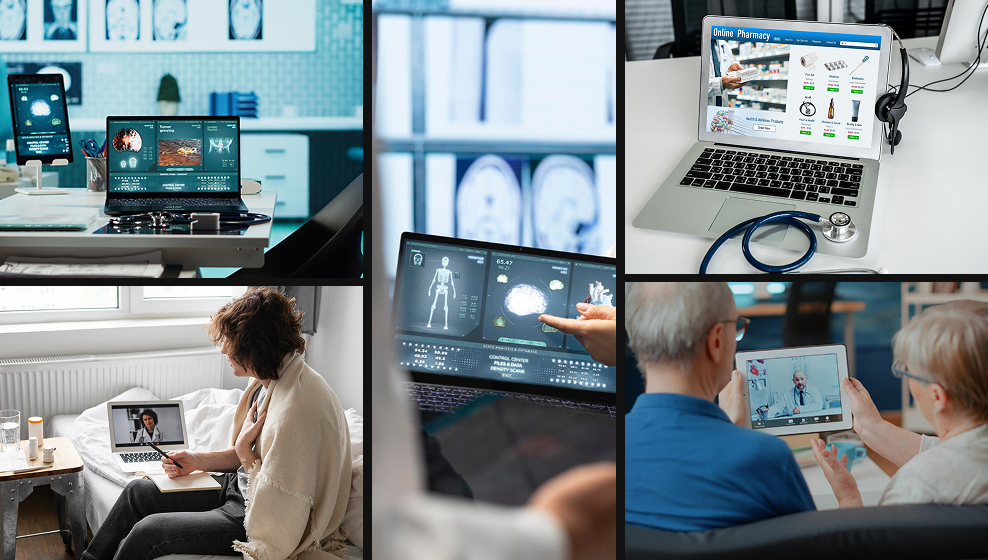
Healthcare is evolving far beyond hospital management systems. Companies are building digital products that solve specific problems for patients, providers, insurers, and pharmaceutical businesses.
Some of the fastest-growing product categories include:
- Patient engagement platforms
Healthcare providers want patients to stay involved in their own care.
That’s why many organizations invest in platforms that combine appointment booking, secure messaging, reminders, medication tracking, educational content, and personalized treatment plans in one place.
The better the engagement, the better the long-term outcomes.
2. Remote Patient Monitoring platforms
RPM has become one of the biggest areas of healthcare innovation.
Instead of collecting data only during clinic visits, providers continuously receive information from connected devices.
These platforms help detect problems earlier while reducing unnecessary hospital visits.
3. AI-powered clinical assistants
Rather than replacing physicians, AI assistants support them throughout the day.
Modern solutions can:
- generate consultation summaries
- organize patient histories
- recommend relevant clinical guidelines
- draft discharge reports
- prioritize incoming requests
For healthcare organizations, this means lower administrative costs and less clinician burnout.
4. Healthcare marketplaces
Patients increasingly expect to compare providers, book appointments online, access reviews, pay digitally, and receive prescriptions through one platform.
Healthcare marketplaces combine these services into a single ecosystem that benefits both patients and providers.
5. Internal software for hospitals
Not every healthcare product is customer-facing.
Many organizations invest in internal systems that improve scheduling, resource allocation, workforce management, inventory tracking, analytics, and communication between departments.
Sometimes these products don’t look impressive from the outside. But they can save hospitals millions of dollars every year.
Why Healthcare Startups Need the Right Technology Partner
Healthcare is one of the most rewarding industries to build products for.
It’s also one of the most challenging.
Unlike many startups, healthcare companies can’t afford to launch an MVP that ignores security, scalability, or compliance. Technical debt becomes expensive very quickly when sensitive patient data, complex integrations, and regulatory requirements are involved.
Choosing the right development partner means thinking beyond implementation.
A strong technology team should understand questions like:
- How will this product scale as the number of patients grows?
- Can it integrate with EHR or third-party healthcare systems?
- Is the architecture flexible enough for future AI features?
- How will patient data be protected?
- Can doctors and patients actually use the product without extensive training?
These decisions have a lasting impact on the success of the product.
At BandaPixels, we’ve worked with healthcare and VetTech companies to build products that balance usability, performance, and security. Whether it’s a telehealth platform connecting patients with doctors or a veterinary solution simplifying pet care, our focus remains the same: creating software that solves real problems and delivers long-term value.
Final Thoughts
Healthcare has always been one of the world’s largest industries.
What’s changing is the role technology plays within it. Digital products are no longer supporting healthcare from the sidelines. They’re becoming part of how healthcare is delivered every day.
For businesses, this creates enormous opportunities to build products that solve real problems for providers, patients, and caregivers.
But healthcare isn’t an industry where speed alone wins.
Success depends on understanding complex workflows, designing intuitive user experiences, building secure and compliant systems, and creating products that people can trust.
And if there’s one thing that’s clear, it’s this:
Healthcare is entering a new phase of digital transformation, and we’re only beginning to see what’s possible.
Let's work together to make your project a success
Contact usRelated News



Last News
Thank you!
We’ve received your contact request and will contact you soon
Something went wrong
We couldn’t receive your contact request. Please try again later.